Greta Garbo: Swedish Elegance Personified
Remembered for her breathtaking beauty, quiet luxury, and enigmatic presence, Greta Garbo cultivated a style that favored substance over display. Her taste in jewelry reflected a deeply personal vision of elegance that remains as captivating today as it was during Hollywood's Golden Age.
6/20/20267 min read
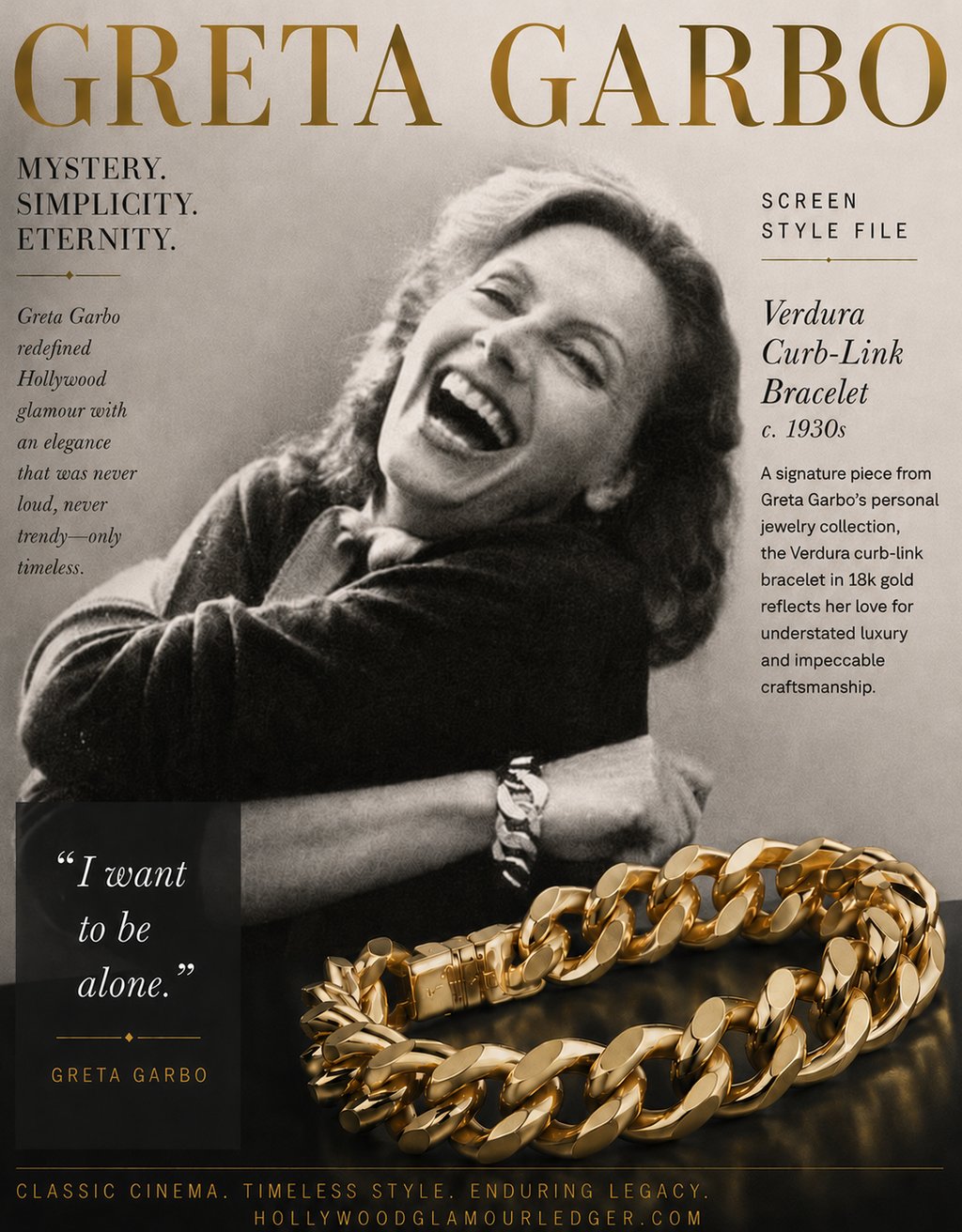
Greta Garbo remains one of Old Hollywood's most enigmatic figures. A surreal actress whose presence felt sculptural, she carried an untouchable demeanor that distinguished her from every contemporary. Her beauty was often described in terms of stillness and shadow, and her approach to jewelry reflected the same philosophy. Garbo favored elegance over extravagance, choosing pieces that complemented rather than competed with her striking features and commanding screen presence.
Unlike many stars of her era, Garbo mastered the art of restraint. Her performances relied not on grand gestures but on subtle expressions, measured movements, and a gaze capable of conveying profound emotion. Whether portraying tragic heroines, aristocratic women, or complex romantic leads, she brought an uncommon psychological depth to her roles. Audiences were drawn not only to her beauty but to the mystery that seemed to exist behind it.
On screen, Garbo embodied a unique blend of strength and vulnerability. Films such as Camille, Queen Christina, and Anna Karenina showcased her ability to transform literary and historical figures into deeply human characters. Her performances possessed a quiet intensity that transcended language and era, helping establish her as one of cinema's first truly international stars.
Aesthetically, Garbo represented a different kind of glamour—one rooted in simplicity, precision, and timeless sophistication. Her sculpted features, luminous eyes, and effortless poise inspired generations of photographers, designers, and filmmakers. Even today, images of Garbo feel remarkably modern, proving that true style is not defined by trends but by enduring individuality.
Perhaps Garbo's greatest achievement was the creation of an enduring myth. By carefully guarding her private life and retreating from public view at the height of her fame, she transformed herself from movie star into legend. Decades after her final screen appearance, Greta Garbo remains a symbol of cinematic artistry, mystery, and the quiet power of understated elegance.
Rather austere in her personal presentation, Greta Garbo cultivated a world of quiet luxury. She surrounded herself with fine art and carefully chosen objects, revealing an appreciation for beauty that was intellectual rather than performative.
Unlike many Hollywood stars of her era, Garbo rarely embraced public displays of glamour and largely avoided the social spotlight, leaving relatively few highly stylized personal photographs behind. After quitting Hollywood at the age of 36, Garbo lived a lavish and comfortable life in New York. A rare insight in her after-Hollywood life was captured by photographers as she vacationed with her friends across the globe. Her social circle included royalty, tycoons, intellectuals and artists. Garbo amongst her people seemed truly at piece and enjoying life.
Her classic style and jewelry can be admired in the few candid photographs by her friends (Photographers like Cecil Beaton and Clarence Sinclair Bull no less) and paparazzi photos that exists. Her jewelry reflected the same sensibility: understated, purposeful, and impeccably crafted. For Garbo, adornment was never about spectacle or excess—it was a subtle expression of taste, individuality, and timeless elegance.
Personal Style: Precision, Heritage, and Quiet Luxury
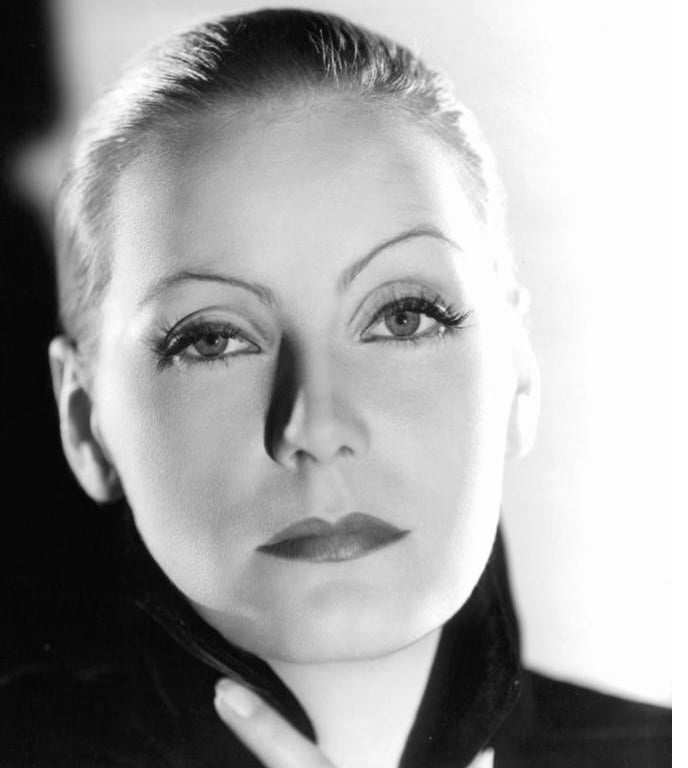
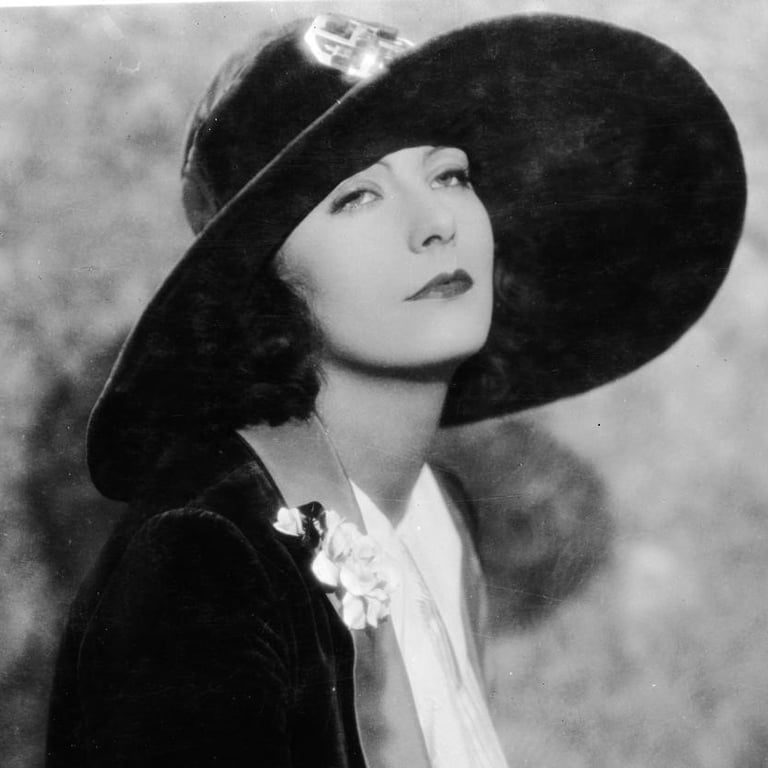
Verdure Curb Link Bracelet and Watch
Founded in 1939 by the legendary Italian-born jeweler Fulco di Verdura, Verdura quickly became synonymous with bold design, exceptional craftsmanship, and timeless elegance. His designs attracted an extraordinary clientele that included Greta Garbo, Ginger Rogers and other icons of the Golden Age.
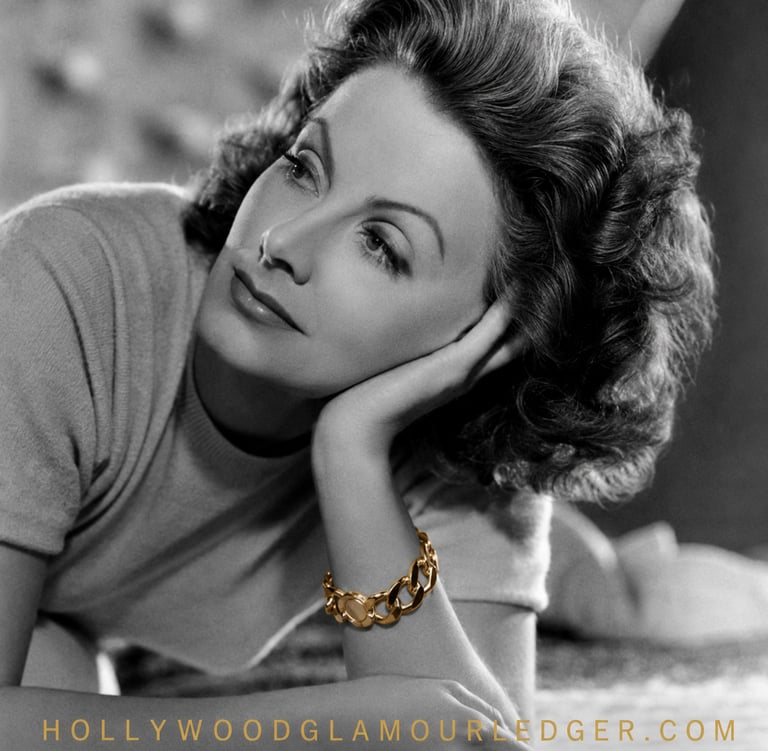
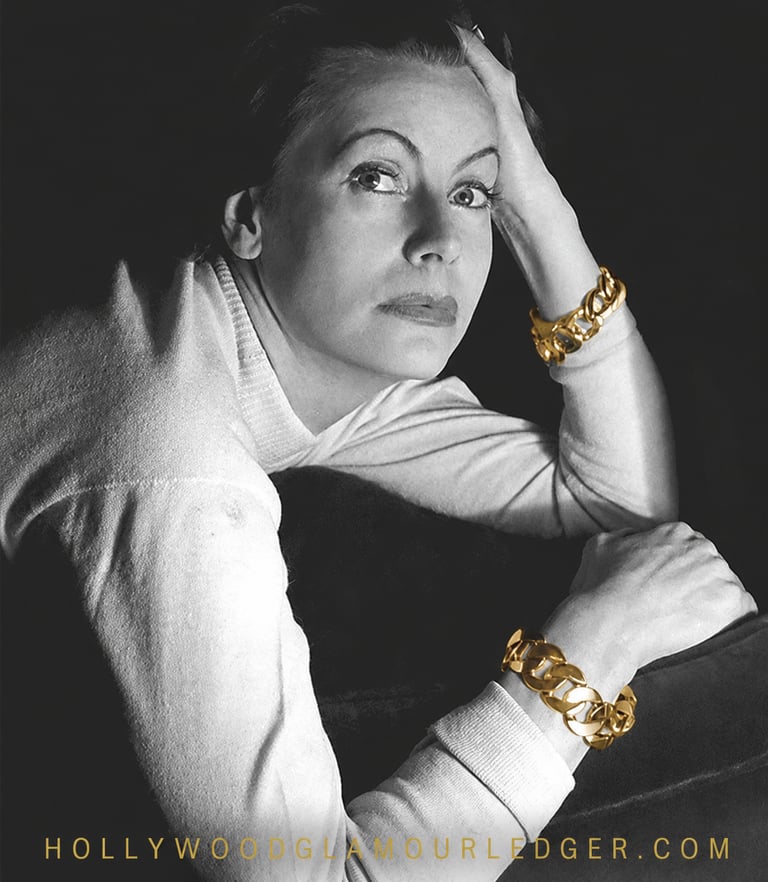
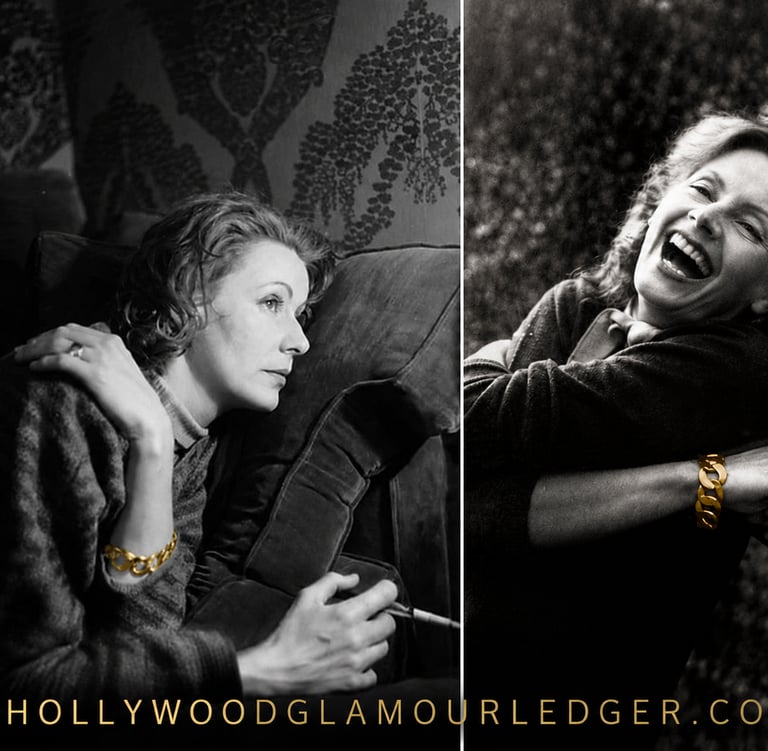
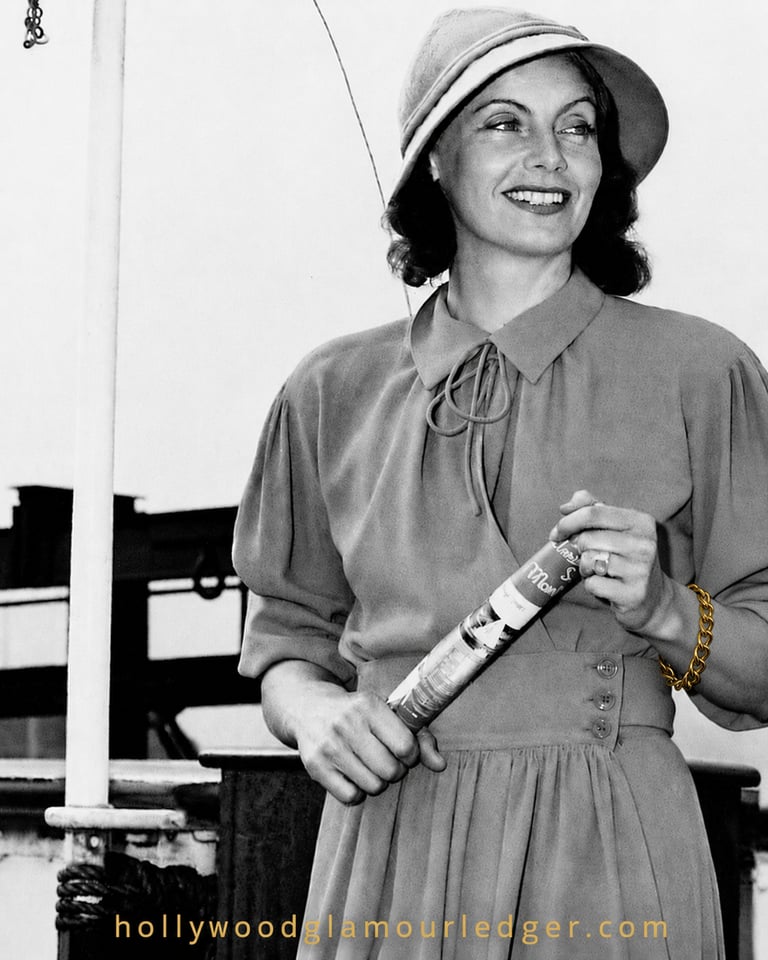
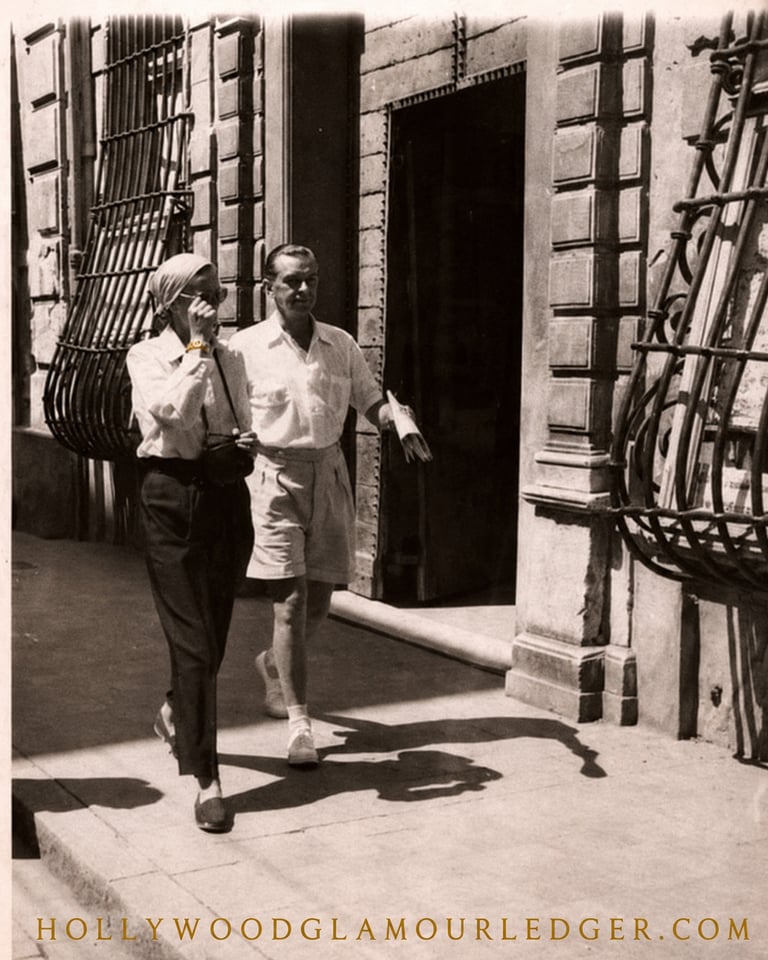
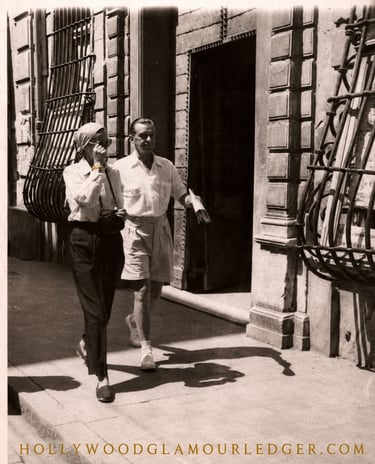
Frequently seen in her private life, Garbo owned multiple Verdure pieces: a structured curb link bracelet and a watch.
The gold Verdure pieces were architectural and fancy yet they seem perfectly in harmony with her statuesque beauty and understated personal style. They are truly timeless creations fitting todays sensibility.
Her Verdure pieces were well loved and she seldom is seen without them in her candid pictures. Whether she was boarding ships, doing yoga, enjoying nature or socializing, her chunky yet sophisticated Verdura pieces glimmer through the pictures.
A Verdura watch attributed to Garbo appeared in auction at Christies.



Garbo's Signet Ring
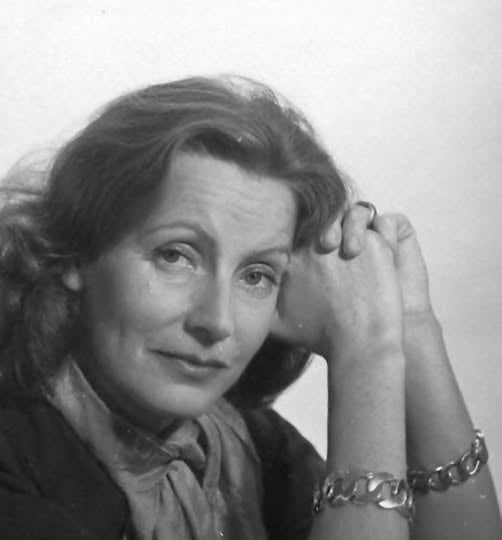
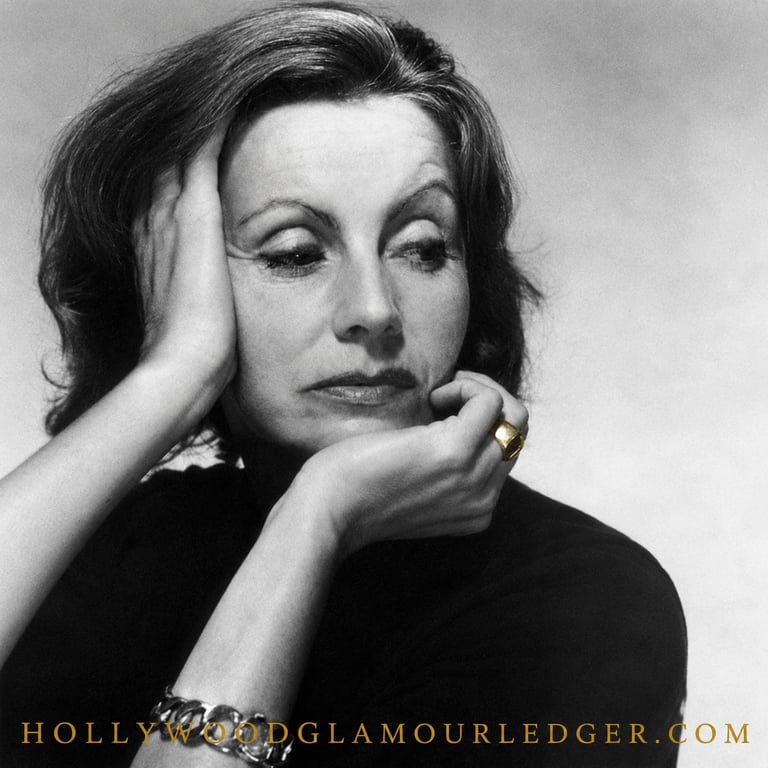
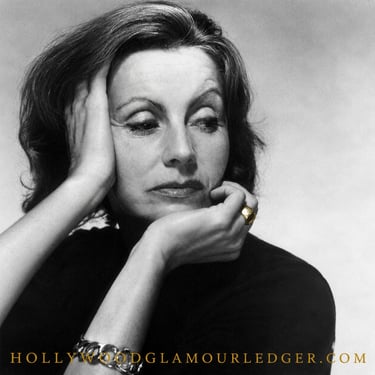
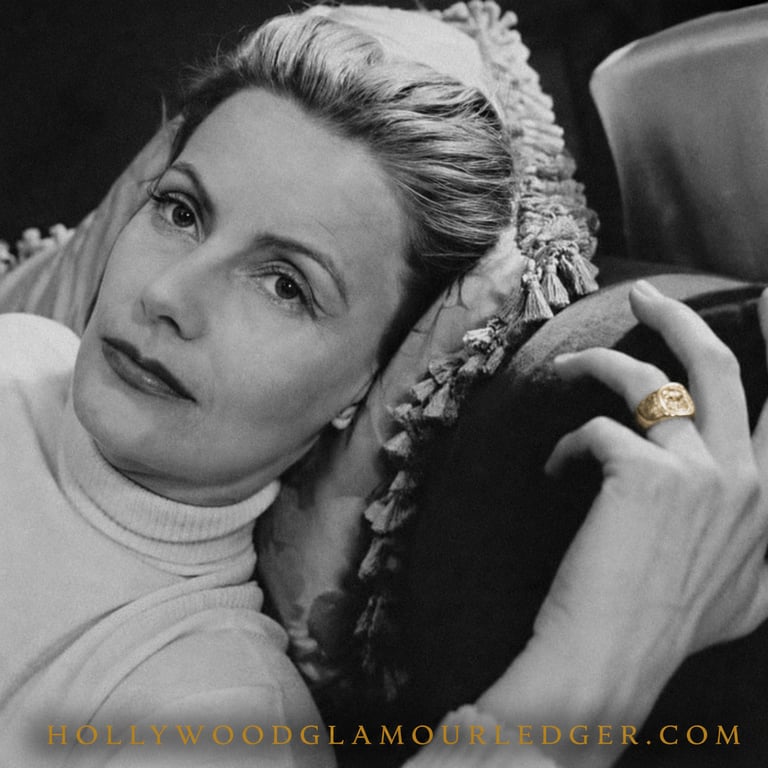
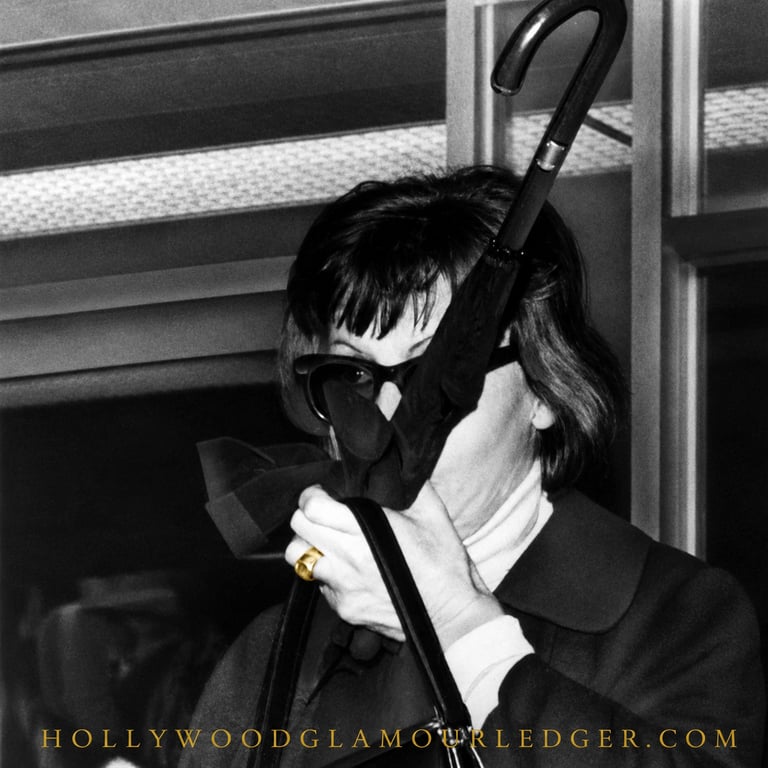
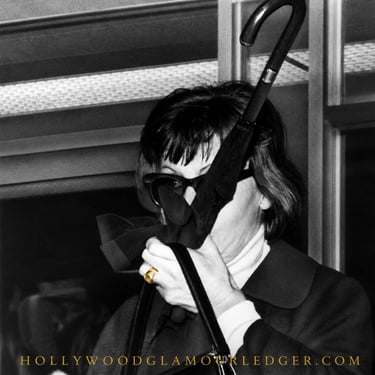
Among Greta Garbo's most frequently photographed personal jewels was a signet-style ring worn consistently throughout her later years. Characterized by its sculptural and almost masculine presence, the ring reflected Garbo's preference for jewelry that projected quiet authority and personal significance.
Some collectors and Garbo scholars have suggested a connection between the ring and the aristocratic Wachtmeister family, with whom Garbo maintained a close lifelong friendship since the 1930s. She chose to wear this ring on her left hand ring finger and was rarely seen without it.
Regardless of its origin, this piece was highly meaningful and became an integral part of Garbo's personal aesthetic.
Monogrammed Jewelry
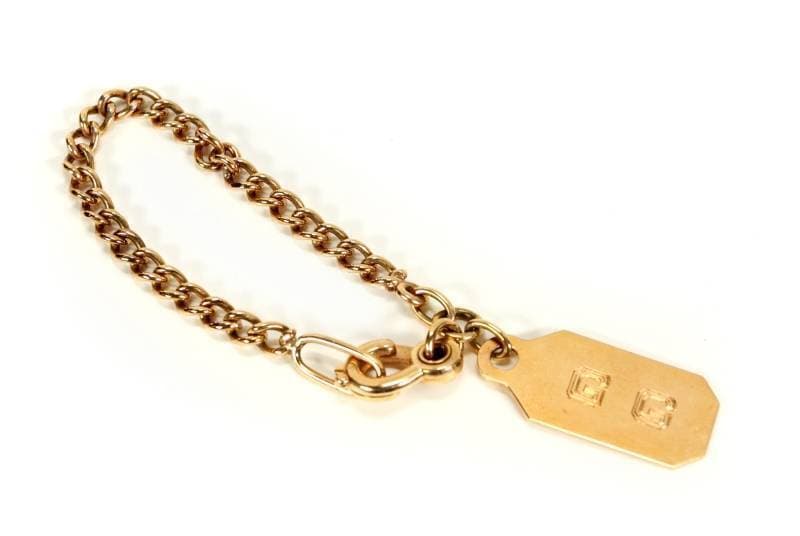
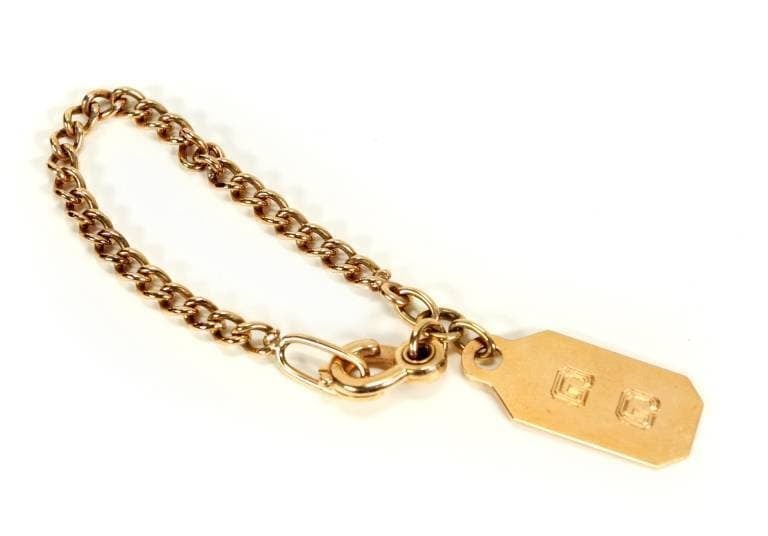
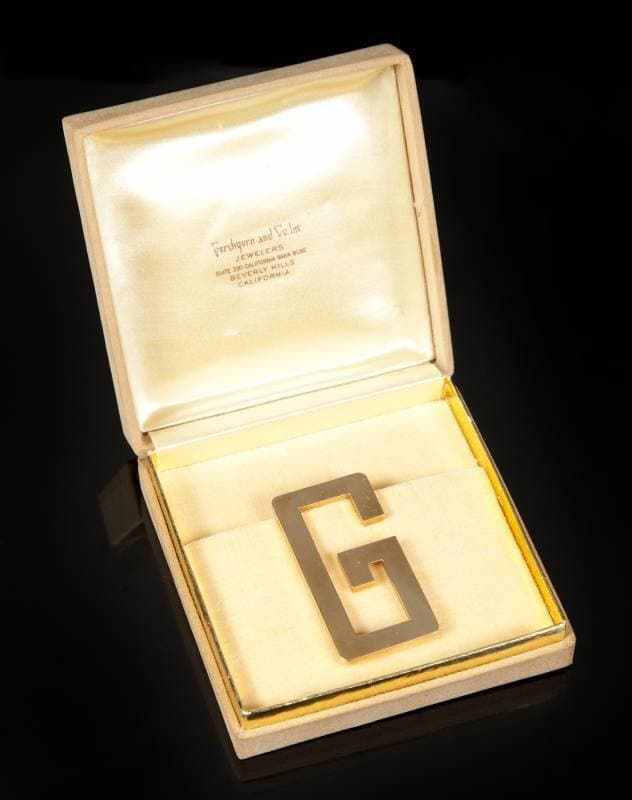
Although Greta Garbo was never publicly photographed wearing her monogrammed jewelry, these deeply personal pieces remained part of her private collection. Among them were a monogrammed gold chain bracelet and a gold brooch bearing the letter "G," reflecting her appreciation for bespoke jewelry with sentimental value. Both pieces later resurfaced at Juliens auctions, offering a rare glimpse into Garbo's off-screen wardrobe and personal taste.
On-Screen Jewelry: Transformation and Narrative Power
Garbo’s films reveal a striking contrast to her personal restraint. On screen, jewelry became language—used to construct identity, signal power, or expose vulnerability.
Mata Hari (1931): Ornament as Seduction
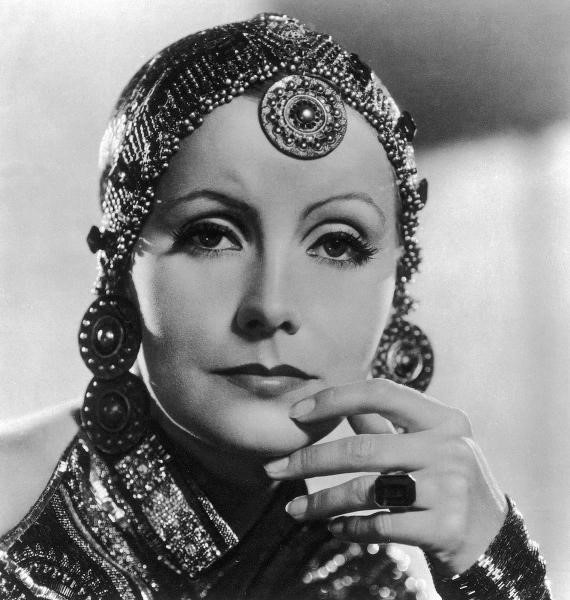
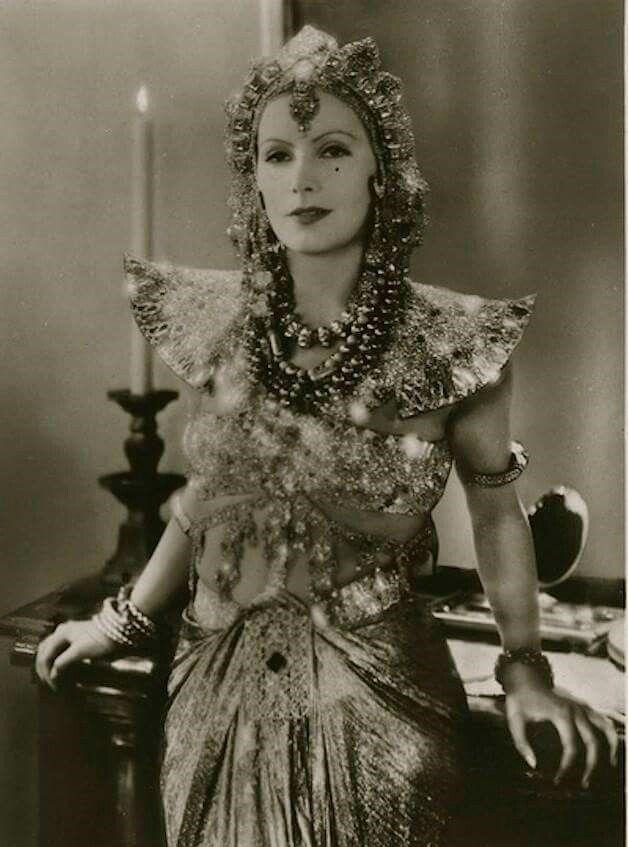
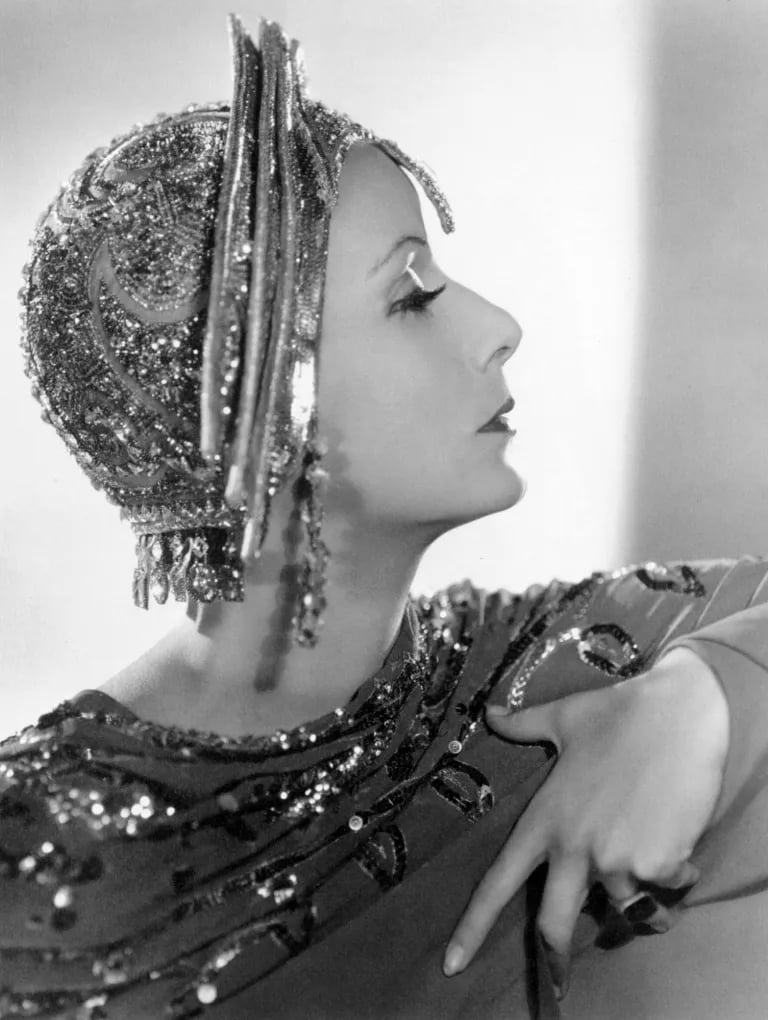
In Mata Hari, Garbo is enveloped in ornaments. Heavy headpieces frame her face, necklaces cascade across her body, bangles on her wrist, arm bracelets, "teeka" like ornaments dangling on her forehead. Every movement is beautifully amplified by reflective surfaces and captured glistening and glimmering on the black and white film.
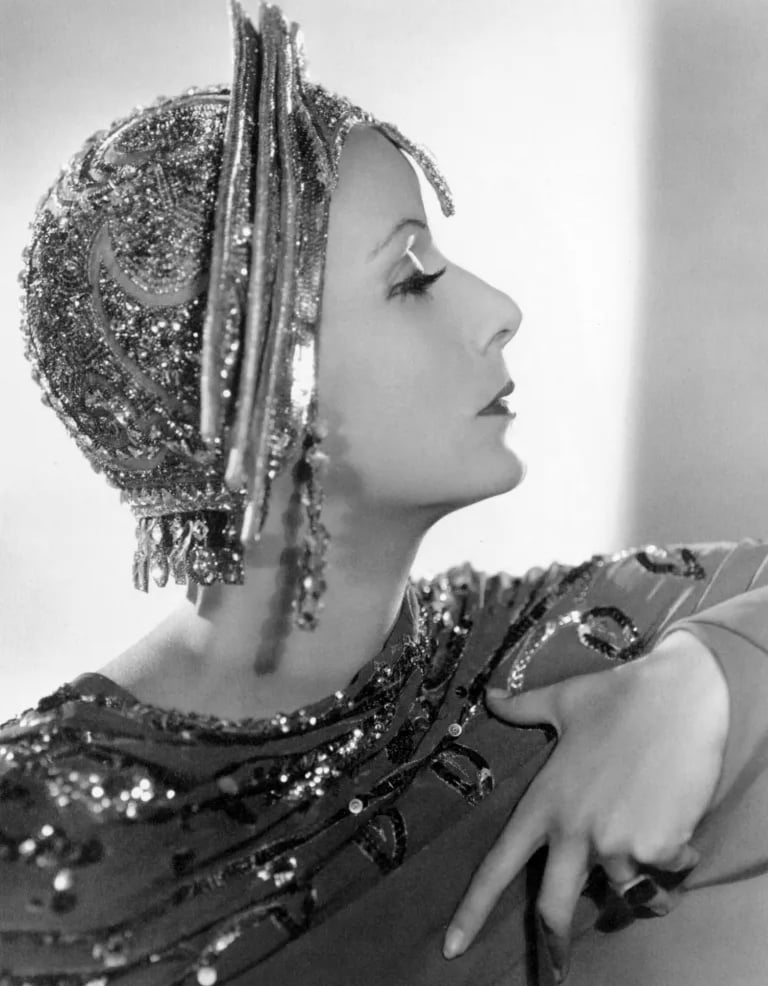
Jewelry and her opulent costumes set the tone for her intriguing character. Lovely exotic head piece cover with bugle beads, metallic thread work, sequins and ornaments blur the line between costume and jewelry. The combination of her glittering costumes and jewlery creates a visual richness and mystery.
Queen Christina (1933): Authoritative Regalness
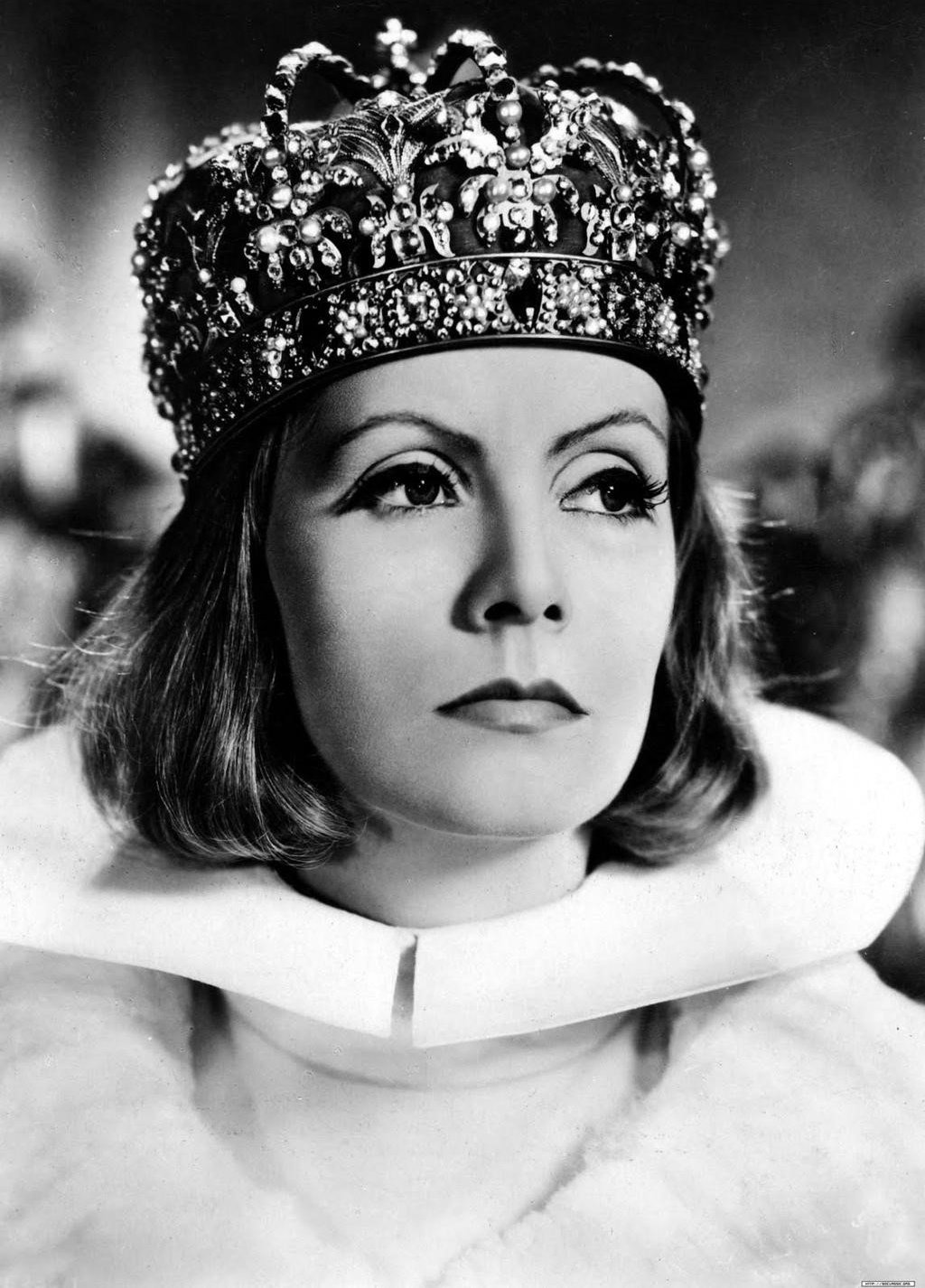
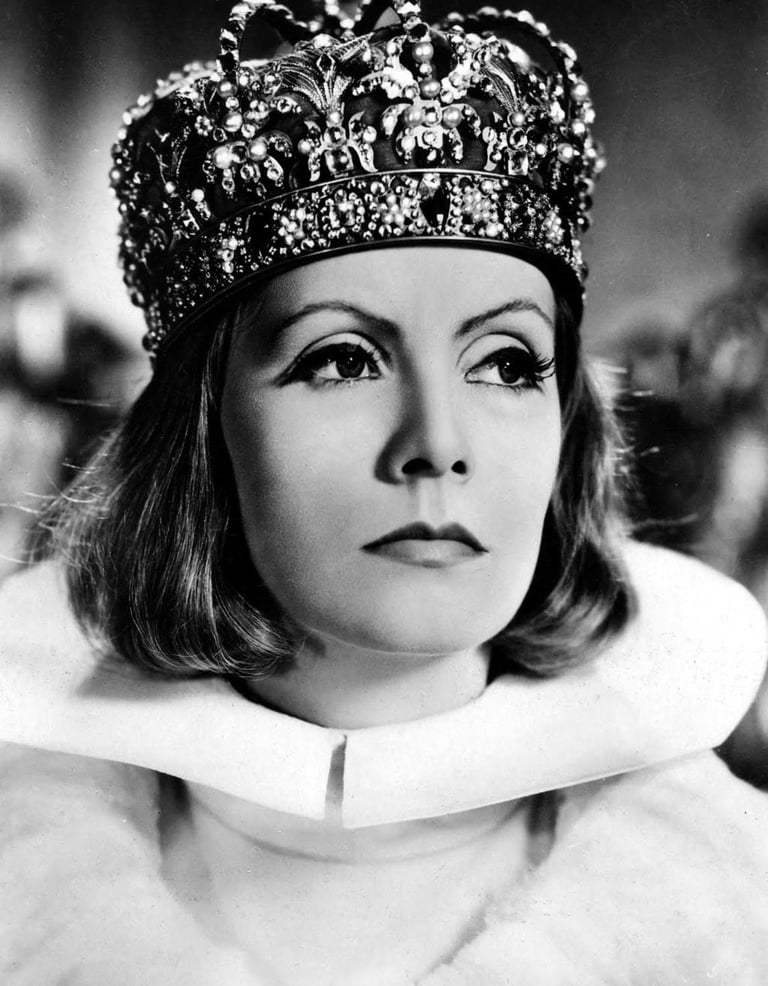
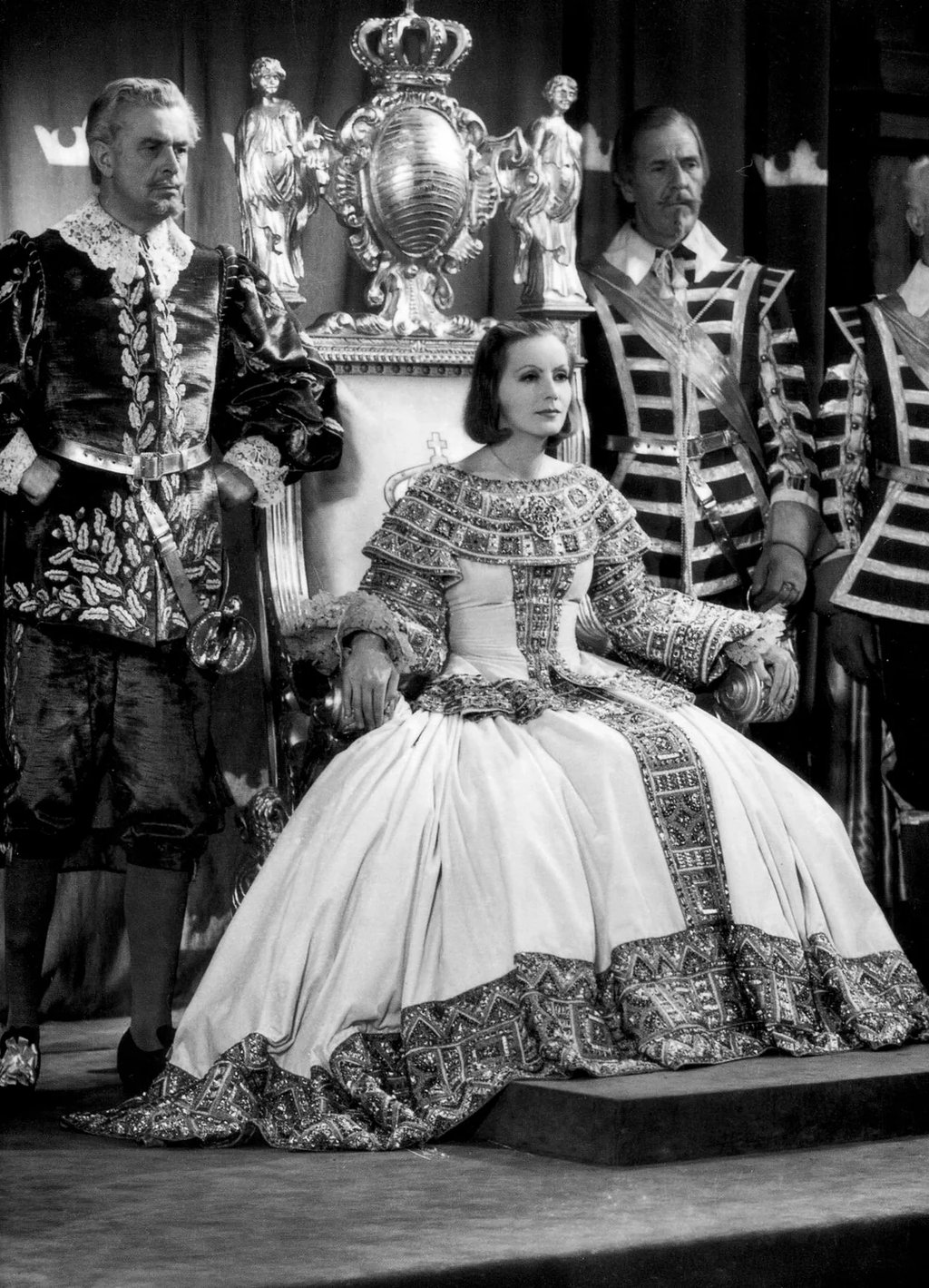
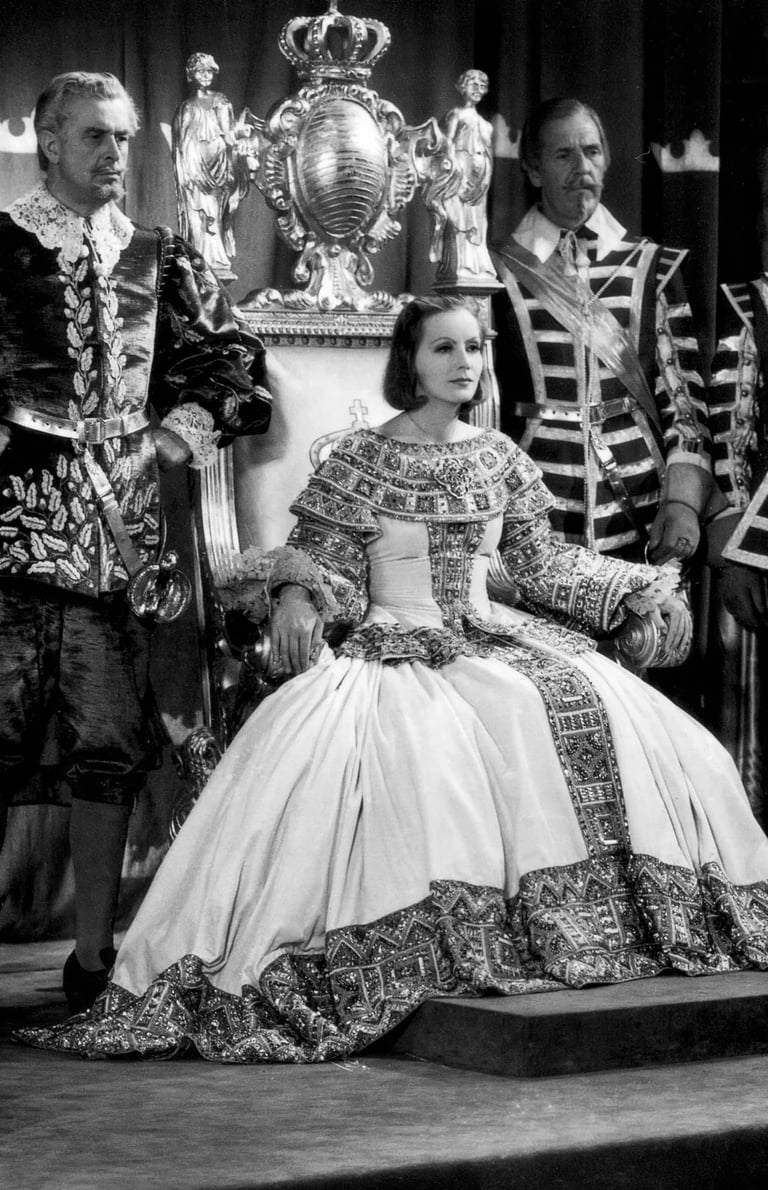
In Queen Christina, Garbo captures audiences in her breath taking performance as the unconventional Queen Christina of Sweden. Garbo radiates a regal and almost unisex aura.
We see sparse adornment which is unusual for a female monarch. She wears a lovely ornate crown as part of her ceremonial jewels without the lavish bejeweled suites, bracelets, brooches worn by royals emphasizing presence over decoration. A memorable vision is of Garbo wearing a heavily embellished 60 pounds gown that is to date featured in many exhibitions. A closeup of the gown reveals impeccable heavy handwork that is complemented with a single celtic style pendant necklace which is just enough ornamentation.
The movie follows the queen's journey from being a monarch to abdicating the throne. The lack of overt adornment combined with her regal disposition whether she is wearing her 60 pounds royal gown as a monarch to chic yet unisex attire as the movie progresses is an interesting juxtaposition throughout the film.
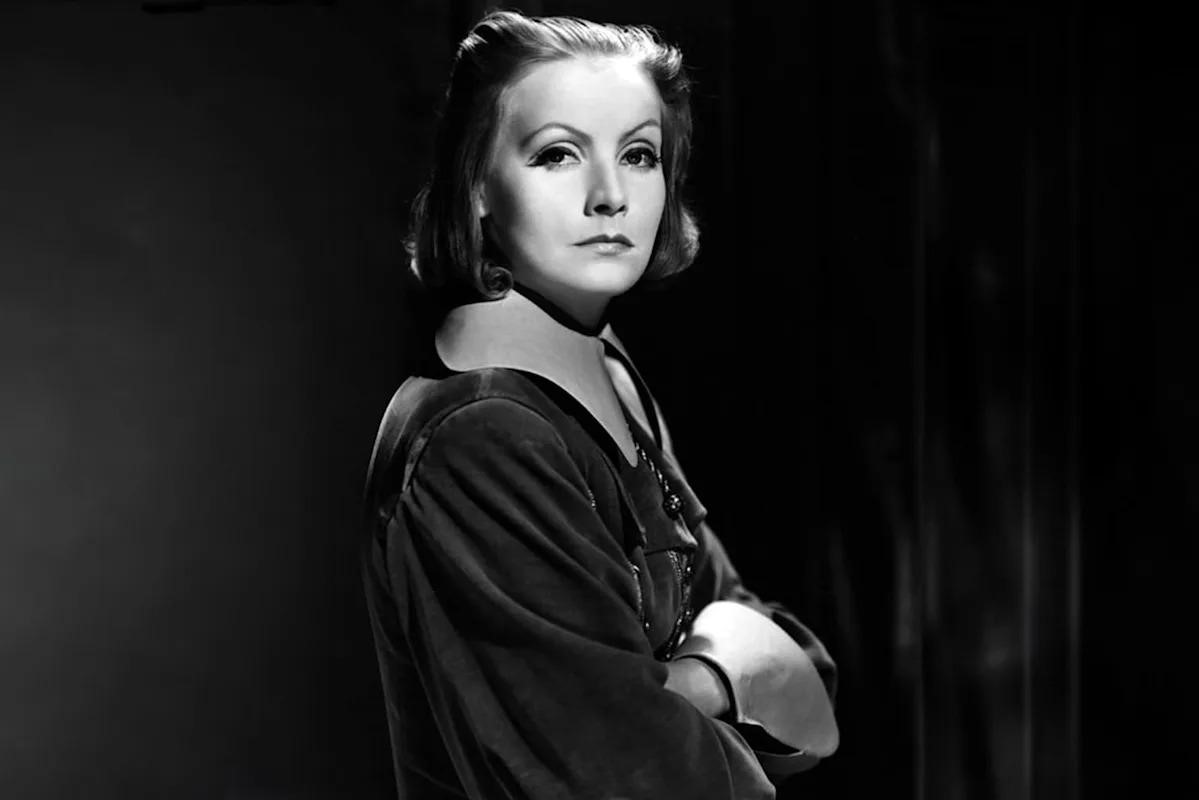
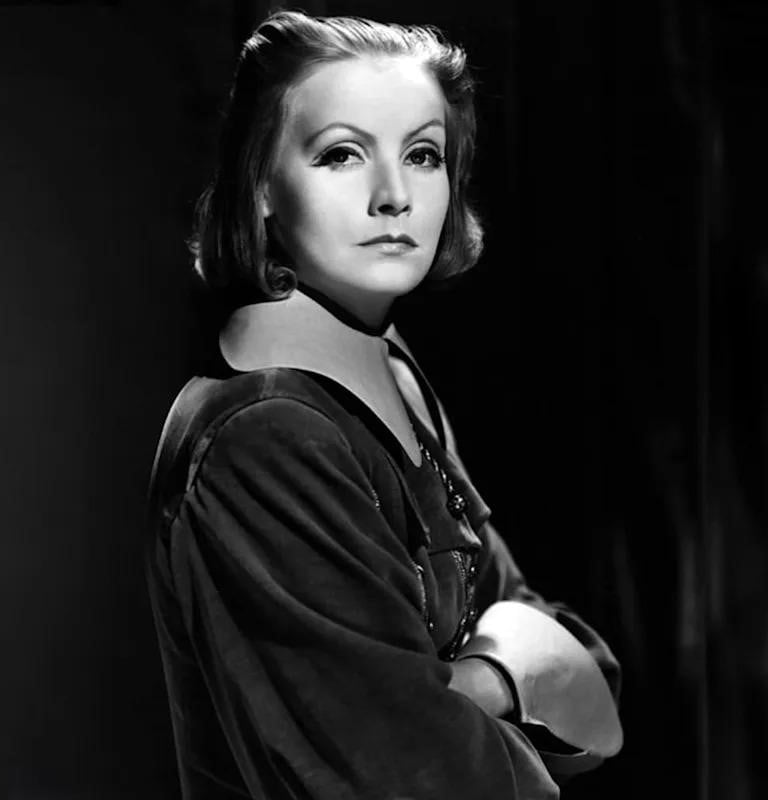
Garbo’s stillness dominates the frame, proving that elegance can exist without embellishment.
Two-Faced Woman (1941): Duality in Style
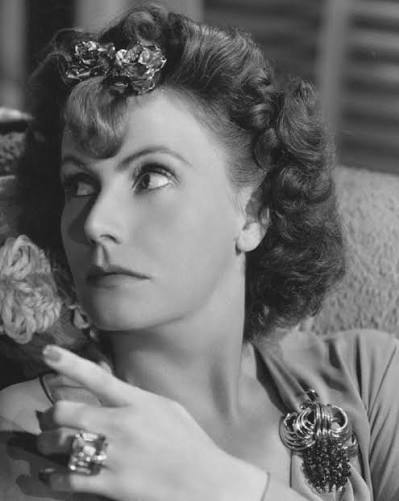
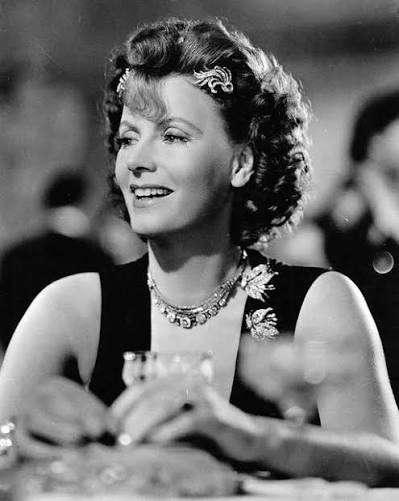
In Two-Faced Woman, Garbo explores dual identity—reflected subtly in her jewelry styling.
More pronounced use of statement necklaces and evening pieces
A shift toward 1940s glamour: slightly bolder, more visible
Jewelry used to distinguish personas within the narrative
Unlike her earlier films, where jewelry either dominated (Mata Hari) or disappeared (Queen Christina), here it operates in balance—enhancing transformation without overwhelming it.
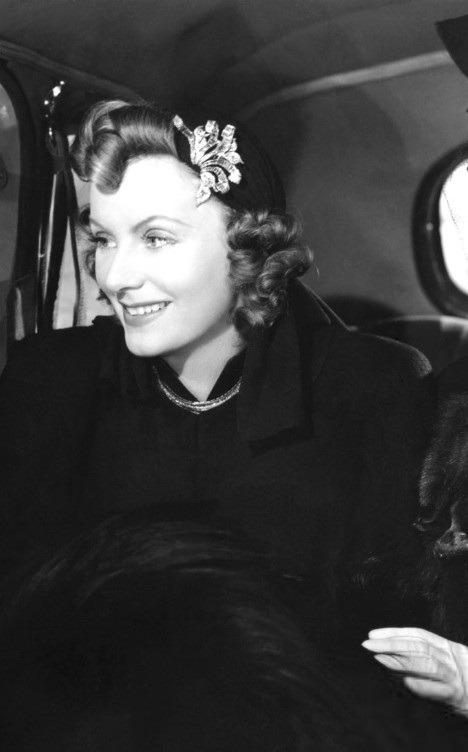
While the costumes are typical understated Garbo chic, she gives great jewelry moments masquerading as her fun sister. She wears lovely brooches in her hair which is such a unique look.
There is a noticeable evolution:
The austerity of the 1930s softens
Glamour becomes more approachable, less symbolic
Jewelry begins to bridge character and performer
This film marks a late-stage shift in Garbo’s cinematic image—one that hints at adaptation, yet still retains her essential restraint.
Contact Us
Reach out for inquiries or archive insights
Connect
Subscribe
© 2025. All rights reserved.